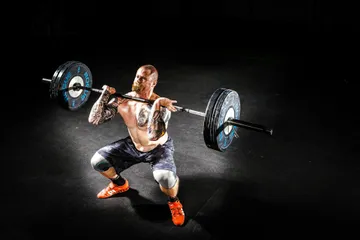
Lifting Weights vs. Cardio: Why Research Favors Iron for Fat Loss
If you’re looking to transform your physique, you’ve likely heard the age-old debate: Should you hit the treadmill or the squat rack to lose fat?
Mainstream fitness advice often suggests that cardio is for getting lean while weights are only for getting “bulky.” However, recent research is challenging that assumption. If your goal is to build muscle while simultaneously dropping body fat, the data points in one direction: strength training outperforms cardio for body recomposition.
Here’s why resistance training delivers more per hour of effort, based on the latest evidence.
The Study: Strength Training vs. Aerobic Exercise
A study involving 304 participants followed individuals on a 500-calorie deficit diet for an average of five months. The participants were assigned to one of three groups:
- Aerobic Exercise: ~200 minutes per week.
- Strength Training: 2–3 sessions per week.
- No Exercise.
All participants maintained a protein intake of 1.5g per kg of body weight to support muscle retention.
The Results
While all groups lost weight, the strength training group had the best body composition outcomes:
- Muscle Retention: The aerobic group actually lost lean mass (muscle). The strength training group was the only one that gained lean mass while losing fat.
- Body Fat Percentage: Strength training was just as effective—and in some metrics, more effective—than cardio at reducing body fat percentage.
This aligns with broader research on progressive overload—the principle that muscles need progressively greater challenge to grow and be retained.
3 Evidence-Based Reasons Why Weights Win for Fat Loss
1. The “Energy Cost” of Muscle
Muscle is metabolically expensive tissue. When you’re in a calorie deficit, your body needs to make up the energy gap by breaking down its own tissue.
- If you lose muscle, you lose less fat. Every gram of muscle your body catabolizes for energy is a gram of fat that stays on your frame.
- By lifting weights, you signal to your body to preserve (and build) muscle, forcing it to rely on body fat stores to cover the energy deficit.
This is why tracking your hard sets per muscle group matters—it ensures you’re providing enough stimulus to retain muscle during a cut.
2. The Long-Term Metabolic Boost
While a single cardio session might burn more calories during the workout than a lifting session of the same length, lifting weights is a long-term investment.
- Resting Energy Expenditure (REE): Building muscle increases your metabolism at rest. Research shows that consistent resistance training over several months can significantly increase resting energy expenditure.
- Over time, trained lifters can have a resting metabolic rate up to 15% higher than untrained individuals.
SetsApart helps you stay on track here. By tracking your hard sets and progressive overload trends, you can ensure you’re consistently providing enough training stimulus to build and maintain that metabolically active muscle tissue.
3. Avoiding “Constrained Energy Expenditure”
Your body adapts to become more efficient. With low-intensity activities like walking or steady-state cardio, the body often compensates by reducing energy expenditure elsewhere. This phenomenon is known as constrained energy expenditure—a model where total daily energy expenditure plateaus despite increasing exercise volume.
- Strength training is high-intensity enough that the body struggles to fully compensate. You get a more reliable calorie burn that doesn’t diminish as rapidly as it does with steady-state cardio.
- This is one reason why understanding optimal rest between sets matters—proper recovery between sets lets you maintain the high intensity needed for this effect.
How to Apply This to Your Routine
If you want to maximize your results, follow these evidence-based principles:
- Prioritize Resistance Training: Dedicate your first 3–4 hours of weekly exercise to strength training. It delivers more value per minute by building muscle and burning fat simultaneously.
- Hit Your Protein Target: Aim for at least 1.5g of protein per kg of body weight to support muscle growth during a deficit.
- Dial In Your Nutrition First: Exercise is for health, performance, and muscle growth. Fat loss is primarily driven by your dietary choices. You cannot out-train a poor diet.
- Use Cardio Strategically: Add cardio only after you’ve maximized your strength training and need additional energy expenditure. Walking is a solid low-impact option that doesn’t interfere with recovery from lifting.
Track what matters. SetsApart focuses on hard sets—the metric research shows drives muscle growth. Instead of logging every rep and every rest period, you track the sets that actually count toward your progress.
The Bottom Line
The goal isn’t just to weigh less—it’s to be leaner and more muscular. Strength training provides the stimulus to change your body composition in a way that cardio alone cannot match. Research consistently shows that lifters preserve more muscle, burn more fat, and build a higher resting metabolism compared to those who rely on aerobic exercise alone.
If you’re choosing between the treadmill and the squat rack, the evidence says: pick up the barbell.
Source
This article was inspired by and summarizes key insights from the following video. Check out the video for more detail and subscribe to the channel—it’s a great resource for evidence-based training.
Watch the full video: Why lifting weights beats cardio for fat loss [New research]