How Many Exercises Do You Actually Need Per Session?
If you’re a guy between 20 and 40 trying to pack on size, you’ve probably been there: It’s International Chest Day. You hit the flat bench, then the incline bench. Then the decline bench (just in case). Then dips. Then cable flyes. Then the pec deck. By the time you walk out of the gym, you’ve done six different exercises for one muscle group.
But is this “kitchen sink” approach actually building more muscle? Or are you just burning time and energy on “junk volume”?
According to Dr. Mike Israetel of Renaissance Periodization, the answer is clear: You’re likely doing too much.
Here’s the science-backed guide to streamlining your workouts for maximum hypertrophy, based on Dr. Mike’s expert breakdown.
The Magic Number: 1 to 3 Exercises Per Session
The old-school bodybuilding mentality suggests hitting a muscle from every conceivable angle in a single workout. However, modern hypertrophy research paints a different picture.
For the vast majority of lifters, the optimal volume per muscle group, per session, falls between 3 and 12 total sets. Any more than that, and you reach a point of diminishing returns where you’re too fatigued to stimulate growth effectively—this is known as “junk volume.”
If you’re capping out at around 10 hard sets per muscle, it makes no sense to spread those across five or six different movements. Instead, you should focus on 1 to 3 high-quality exercises per session. Using SetsApart to track your hard sets per muscle group helps ensure you stay within this optimal range without accumulating excessive fatigue.
Why You Don’t Need to Hit “Every Angle”
Most muscles aren’t as complex as bro-science would have you believe. They generally have only a few main functional elements.
- Chest: You have the sternal pectorals (main/mid/lower) and the clavicular pectorals (upper chest). Maybe you add a fly movement for a different tension curve. That’s it. Three angles maximum.
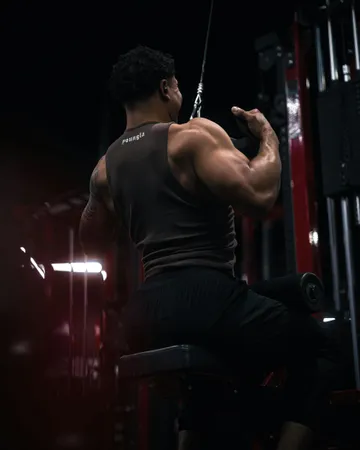
- Back: It’s complex, but boils down to vertical pulling (lats), horizontal pulling (rhomboids/traps), and spinal extension (erectors). A few well-chosen moves cover it all.
- Quads: Their main job is knee extension. Whether you Squat, Leg Press, or Hack Squat, you’re hitting the vast majority of the muscle. You don’t need to do all three in one day.
The Hidden Benefits of Doing Less
Stripping back your exercise selection isn’t just about saving time—it’s about increasing the quality of your growth stimulus.
1. The “Groove” and Mind-Muscle Connection
When you jump from machine to machine every two sets, you constantly break your rhythm. Dr. Mike notes that your technique and mind-muscle connection often improve significantly after your first few sets.
By staying on one exercise for 4, 5, or even 6 sets, you take advantage of this “groove.” You’re warmed up, your joints feel good, and you can push closer to failure safely. Often, the best growth stimulus comes from those later sets where you’re locked in.
Training with proper intensity—close to failure—becomes more effective when you’ve established this technical groove through multiple sets of the same movement.
2. Avoiding the “Gym Safari”
We’ve all been there: You finish your set, unrack your weights, and walk across the gym only to find equipment occupied for extended periods.
By sticking to fewer exercises, you reduce the time wasted waiting for equipment and setting up stations. Once you claim a squat rack or a machine, you can camp out there and get all your high-quality work done without interruption.
3. Saving Variations for Later
If you do every chest exercise known to man in Week 1, what do you do when you hit a plateau in Week 8?
By limiting yourself to 2-3 exercises now, you keep other effective movements “in your back pocket.” When your current routine gets stale, you can rotate in fresh exercises that your body hasn’t adapted to yet, effectively implementing progressive overload through exercise variation.
Optimized Sample Breakdowns
Here’s how you can apply this minimalist philosophy to get a massive pump without living in the gym. Track these sessions in SetsApart to monitor your weekly volume distribution across muscle groups.
Back Day
Instead of a confusing circuit of machines, keep it simple:
- Bent Over Rows: 4 sets (Hits lats and erectors)
- Pull-Ups: 3 sets (Vertical pull for lats)
- Lat Prayers/Pullovers: 3 sets (Isolation)
Total: 10 sets. Your back will be toasted, and you’ve covered every function.
Chest Day
- Incline Barbell Press: 4 sets (Upper chest focus)
- Cable Flyes: 4 sets (Stretch and contraction)
Total: 8 sets. You’ve hit heavy pressing and isolation. If you need more lower pec work, save it for your second chest session later in the week.
Biceps
- EZ Bar Curls: 4 sets heavy + 2 sets light (back-off sets)
Total: 6 sets. You don’t even need to change the bar or move spots. This provides an amazing stimulus-to-fatigue ratio without overcomplicating a simple muscle group.
Hamstrings
- Stiff-Legged Deadlifts: 2-4 hard sets
If you do these with proper technique and full range of motion, your hamstrings should be destroyed. You don’t need lying curls, seated curls, and single-leg curls on top of this. Save those for a different day.
The Takeaway
You don’t need to eat every item on the menu to get full, and you don’t need to do every exercise in the gym to get big.
The Strategy:
- Pick 1-3 exercises per muscle group for that session
- Hit them hard for multiple sets (3-6) to maximize your technique groove
- Split your volume: Hit the muscle again later in the week with different exercises if you need to cover other angles
Understanding the minimum effective dose principle helps you avoid unnecessary volume while still maximizing growth. Stop chasing variety for variety’s sake. Pick the big movers, master them, and track your progress consistently with tools like SetsApart to ensure you’re applying progressive overload week after week.
Source
This article was inspired by and summarizes key insights from the following video. Check out the video for more detail and subscribe to the channel—it’s a great resource for evidence-based training.
Watch the full video: How Many Exercises Do You Need To Grow Muscle? (PER SESSION)